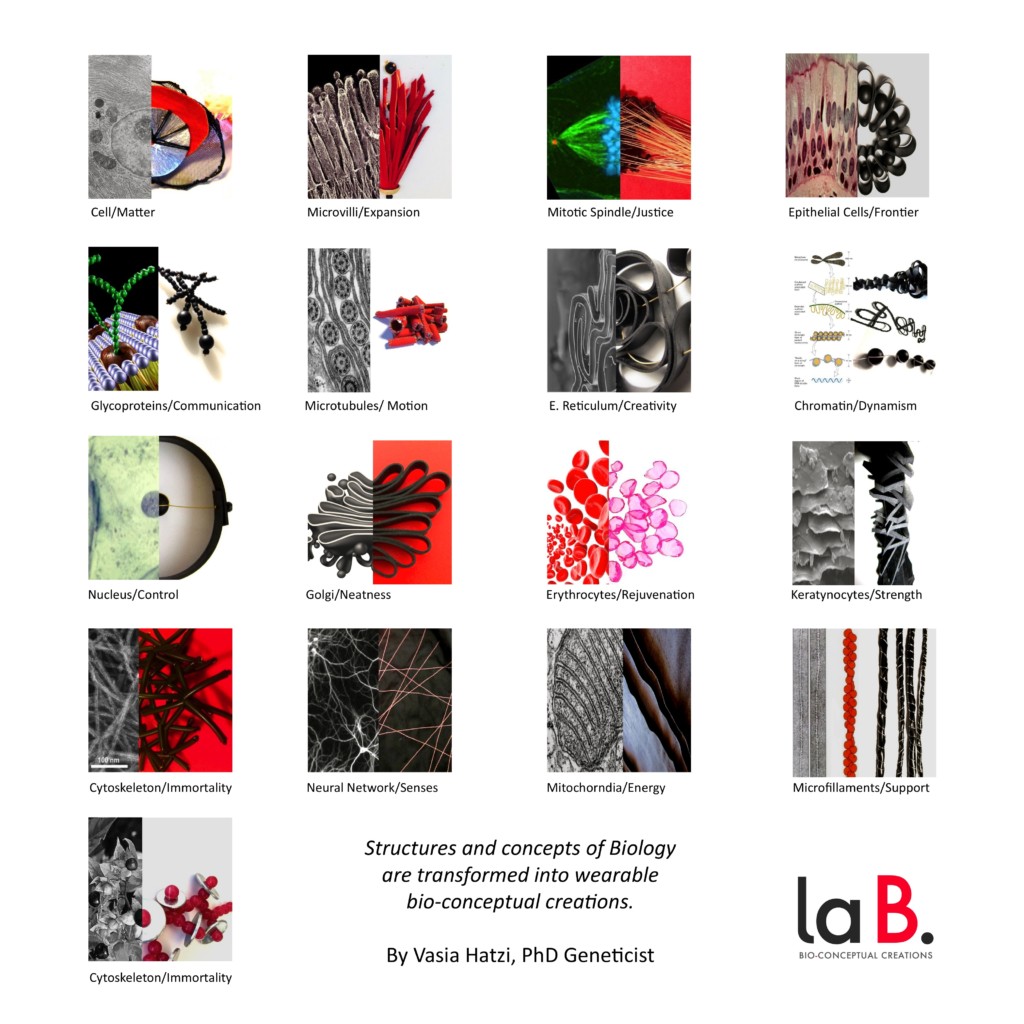
The concepts of LaB. bio-conceptual creations and their symbolism through hybrid images. The symbolism of each creation arises from the biological function of the referred organelle. On the left side of the picture are illustrated the biological images as seen under the microscope and on the right side a detail of the bio-conceptual creation. ©Vasia Hatzi
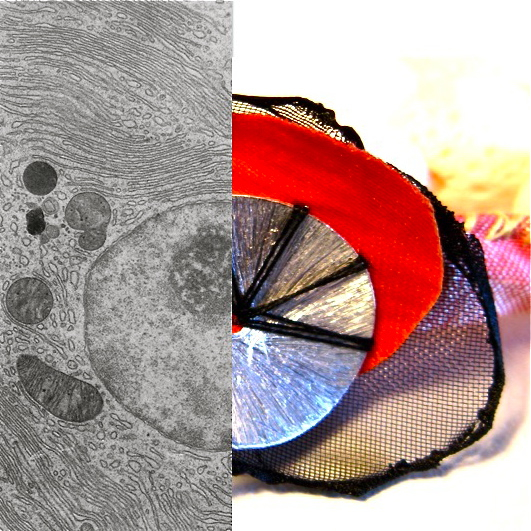
Cell / Bio-symbolism:Matter ©Vasia Hatzi
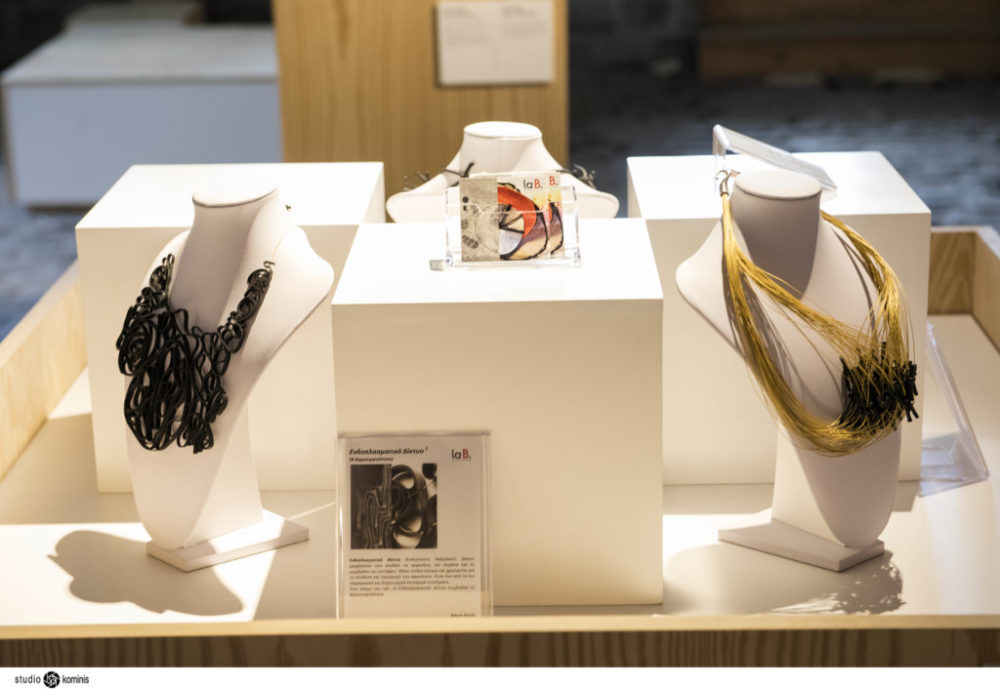
LaB. Bio-conceptual Creations in the MEDinARΤ exhibition "Where MEDicine and ART collide. Part I: The Greek Artists", Athens Science Festival 2017, Technopolis City of Athens, Greece. Photo credits: Nikolas Kominis / Studio Kominis.
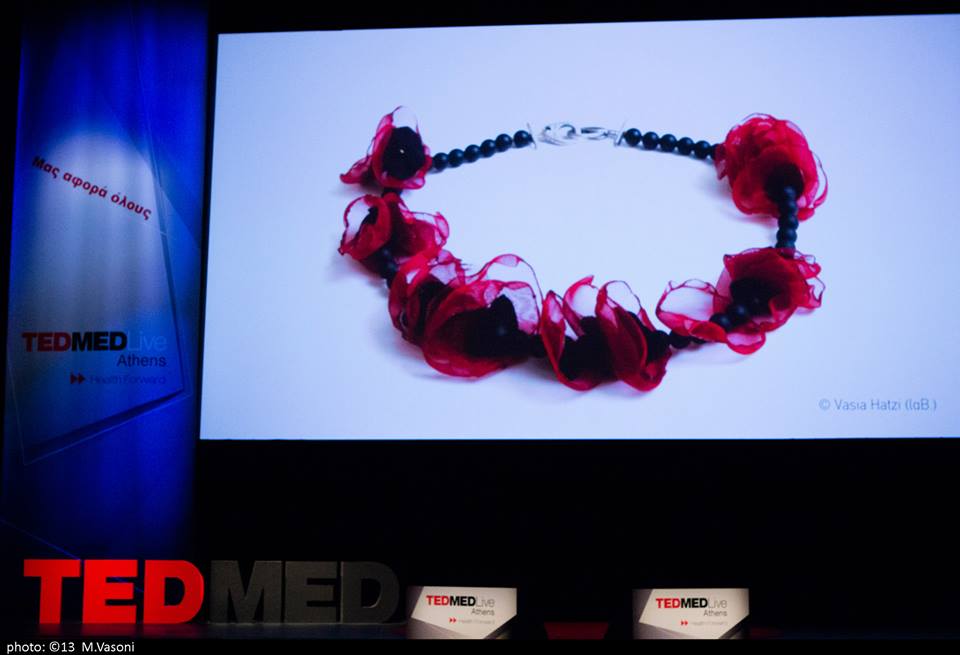
"Erythrocytes" (Necklace). Erythrocytes or Red Blood Cells (from Greek erythros for “red” and kytos for “hollow”, with cyte translated as “cell” in modern usage) are the most common type of blood cells with a unique discoid shape. Deliver oxygen from the lungs to the body tissues via the blood flow. These cells are rich in haemoglobin, an iron containing biomolecule which gives blood its red color. Bio-symbolism: Breath. Image from the MEDinART video projection, TEDMEDLive Athens 2013, Onassis Cultural Center, Athens-Greece. Photo credits: Marianna Vasoni ©Vasia Hatzi
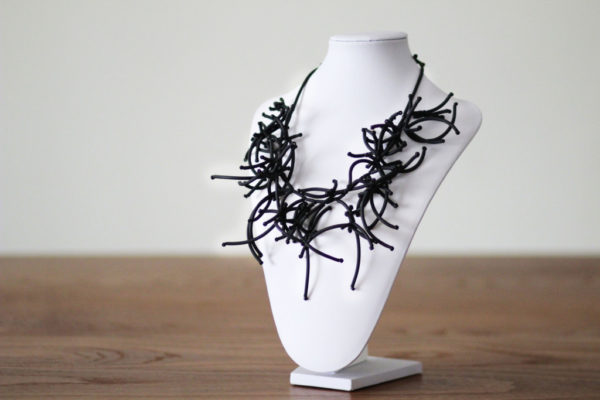
"The Cytoskeleton". Inspired by Cytoskeleton, the proteinaceous network that provides structural support to the cell like the skeleton of the human body. Bio-symbolism: Immortality.
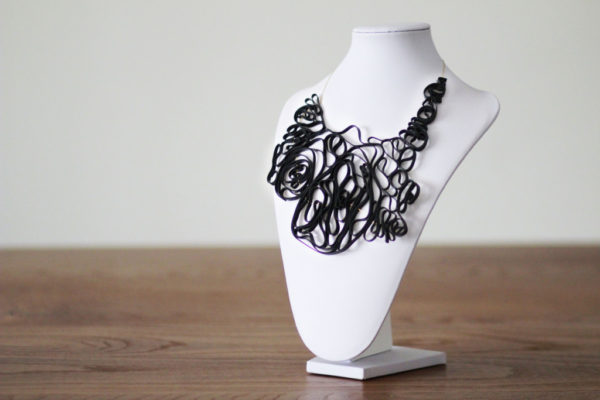
"Endoplasmic Reticulum". Inspired by the Endoplasmic Reticulum: the membranous network in the cell that is continuous with the outer nuclear membrane. Endoplasmic Reticulum is one of the most productive cellular organelle since in its membranes numerous biomolecules are formed (lipids, phospholipids, steroids). Bio-symbolism: Creativity. Photo credits: Raphael Fotopoulos ©Vasia Hatzi
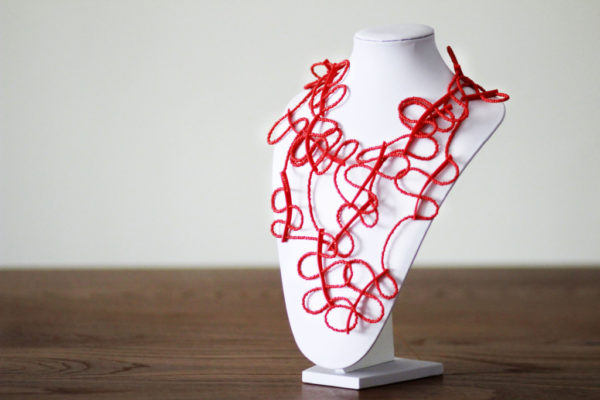
"The 300nm Fiber". Inspired by the tertiary level of DNA packaging within the cell nucleus. This structure is 300nm in diameter and is called 300nm DNA Fiber. The packaging of DNA reflects the highly dynamic profile. Bio-symbolism: Dynamism and Flexibility. Photo credits: Raphael Fotopoulos ©Vasia Hatzi
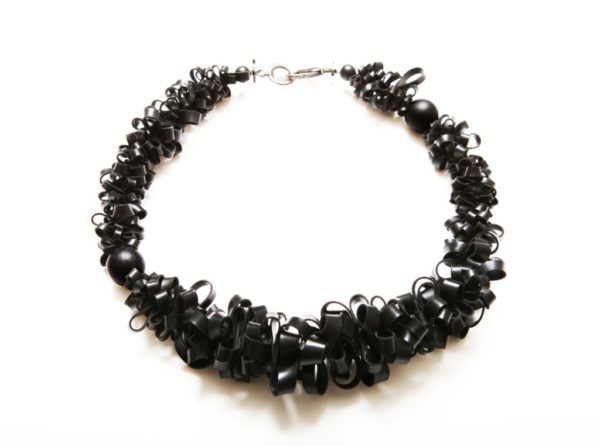
"DNA Scaffold". Chromatin (from Greek khrōma, which means ”color”). Chromatin is the combination of DNA and proteins that make up the cell nucleus content. DNA molecule is a 2.5m long molecule that fits in the cell nucleus of only 5μm in diametre. To fit inside the tiny cell nucleus, DNA helix undergoes several levels of packaging. At the primary level of DNA packaging the DNA double helix wraps around proteins (histones) forming nucleosomes; the “beads on a string” structure. Multiple histones wrap into a 30 nm fibre consisting of nucleosome arrays in their most compact form. Further chromatin packaging leads to the formation of Scaffold and finally to the formation of chromosome. A human cell nucleus contains 46 chromosomes. The packaging of DNA reflects the highly dynamic structure of the molecule. Bio-symbolism: Dynamism and Flexibility. Photo credits: Yiorgos Assimakopoulos ©Vasia Hatzi
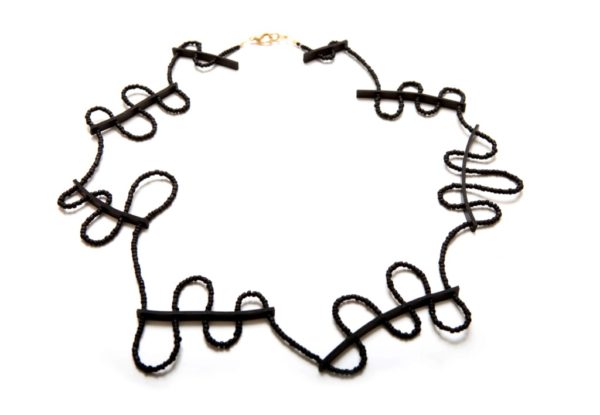
"The 300nm Fiber". Inspired by the tertiary level of DNA packaging within the cell nucleus. This structure is 300nm in diameter and is called 300nm DNA Fiber. The packaging of DNA reflects the highly dynamic profile of the molecule. Bio-symbolism: Dynamism and Flexibility. Photo credits: Yiorgos Assimakopoulos ©Vasia Hatzi
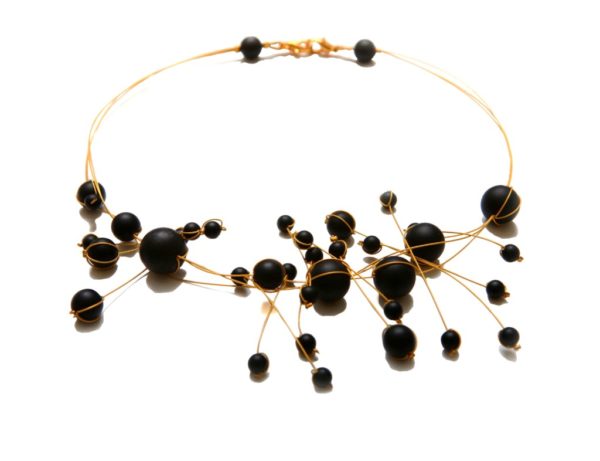
"Nucleosomes". Chromatin (from Greek khrōma, which means ”color”). Chromatin is the combination of DNA and proteins that make up the cell nucleus content. DNA molecule is a 2.5m long molecule that fits in the cell nucleus of only 5μm in diametre. To fit inside the tiny cell nucleus, DNA helix undergoes several levels of packaging. At the primary level of DNA packaging the DNA double helix wraps around proteins (histones) forming nucleosomes; the “beads on a string” structure. Multiple histones wrap into a 30 nm fibre consisting of nucleosome arrays in their most compact form. Further chromatin packaging leads to the formation of Scaffold and finally to the formation of chromosome. A human cell nucleus contains 46 chromosomes. The packaging of DNA reflects the highly dynamic structure of the molecule. Bio-symbolism: Dynamism and Flexibility. Photo credits: Yiorgos Assimakopoulos ©Vasia Hatzi

Vasia Hatzi
