Description of works
01-04
Works from the project Light and Tranformations
While exploring the mental, perhaps even spiritual effects of light, color and form, architectural details can be converted into abstract rhythmic and harmonic structures through the concept of relating art with various depictions of morphologies of biological structures or representations of analysis on them. In the first two works, c-type photographs of dramatic close ups of architectural lighting designed also by the artist, were cut off into equally sized square parts and then recomposed and connected with staples within a frame of reference in DNA sequencing. In the other two, using as “substrates” inkjet prints of architectural lighting details once again, shot during electrical hardware installation, many layers of cells are created by ink. The lines intersect in a way of modifying a cell tissue-e.g., epithelium, that is embodied in the printed image.
05-06
Works from the project Marlene Dietrich
In this project, the portrait of Marlene Dietrich has been used as a starting point of a series of numerous works created with the technique of engraving on linoleum. The way that the portrait has been approached and processed resulted prints that look very similar to medical imaging-i.e., x-ray, ct scan, used in diagnostics. This methodology, which is based on an analytical temperament, allows the viewer to dive into the inner world, literally and figuratively, of this legend.
07-12
Works from the project Fragments of Dystopia
These works are related to fictional representations of intertemporal urban Dystopia. They aggregate fragments that depict socio-political, urban and cultural issues, and also structures of activity within the human habitat. A key tenet in these representations of elements of our decaying global community is a perceived relation between built environment and man. Urban fabric is seen here as an organism consisting of cells, tissues, organs and systems. Sometimes these works seem as layered “aerial x-rays”, creating a kind of urban palimpsests that encode information on urbanization. In this imaging/mapping of human geography these carcinoma-like Kafkaesque fields are composed by hybridizing many elements: buildings, urban plans, mechanical branches, biological structures, archaeological plans, computer hardware networks and lettering that ranges from ancient symbols to binary code.
Tolis Tatolas
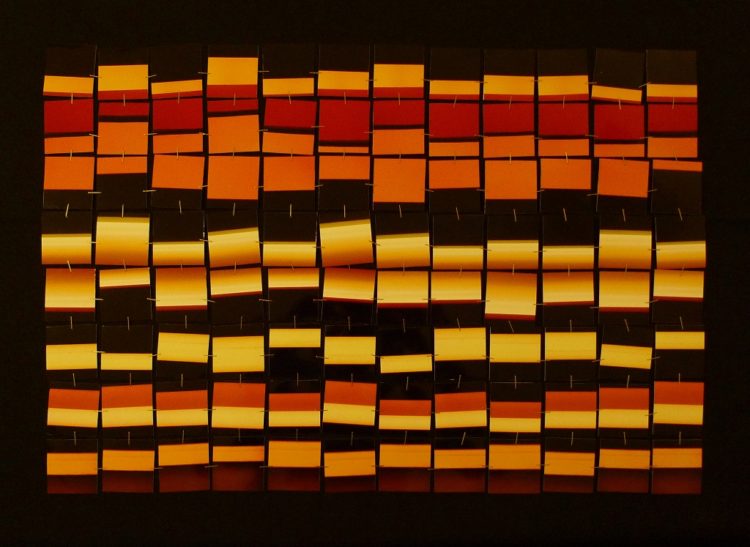
(1) Sequenza I (2014). C-type prints and staples mounted on textile (60x80cm). Signed, titled and dated in ink on label verso. ©Tolis Tatolas
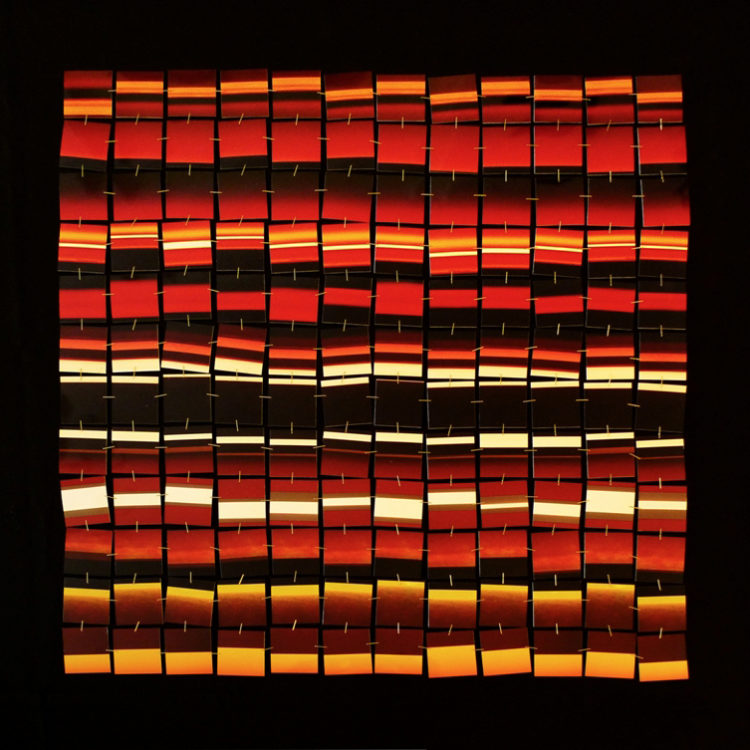
(2) Sequenza II (2014). C-type prints and staples mounted on textile (80x80cm). Signed, titled and dated in ink on label verso. ©Tolis Tatolas
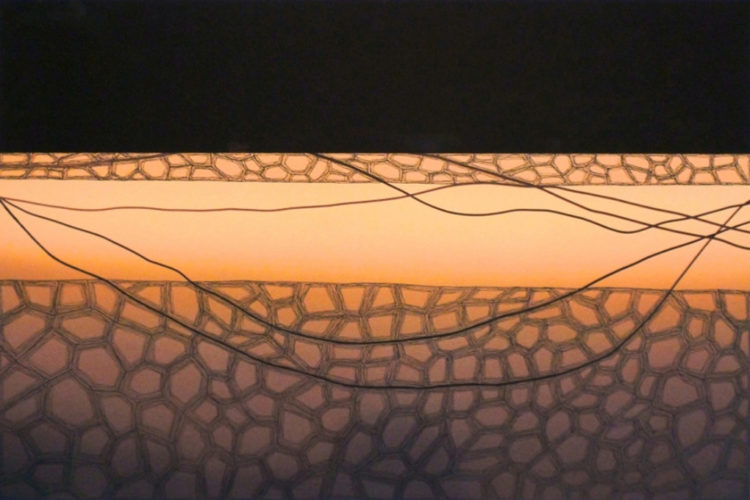
(3) Cell Layers (2010). Ink and collage on inkjet print
image size 40x60cm / paper size 50x70cm. Titled, signed and dated in ink the lower right margin. ©Tolis Tatolas
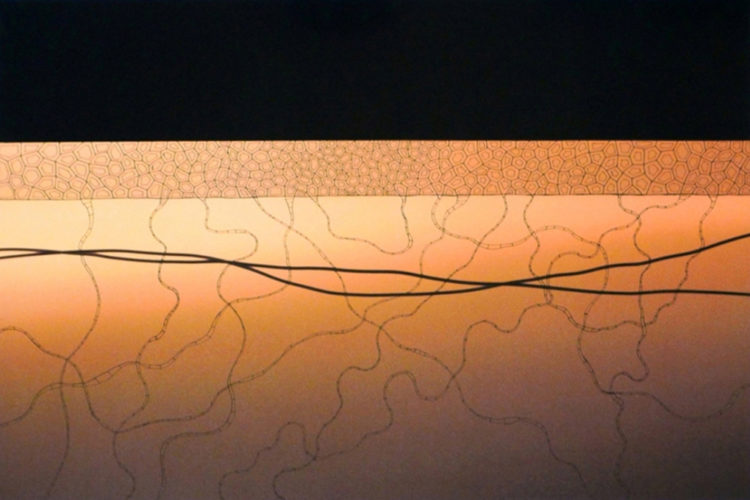
(4) Cell Layer (2010). Ink and collage on inkjet print
image size 40x60cm / paper size 50x70cm.
Titled, signed and dated in ink the lower right margin. ©Tolis Tatolas
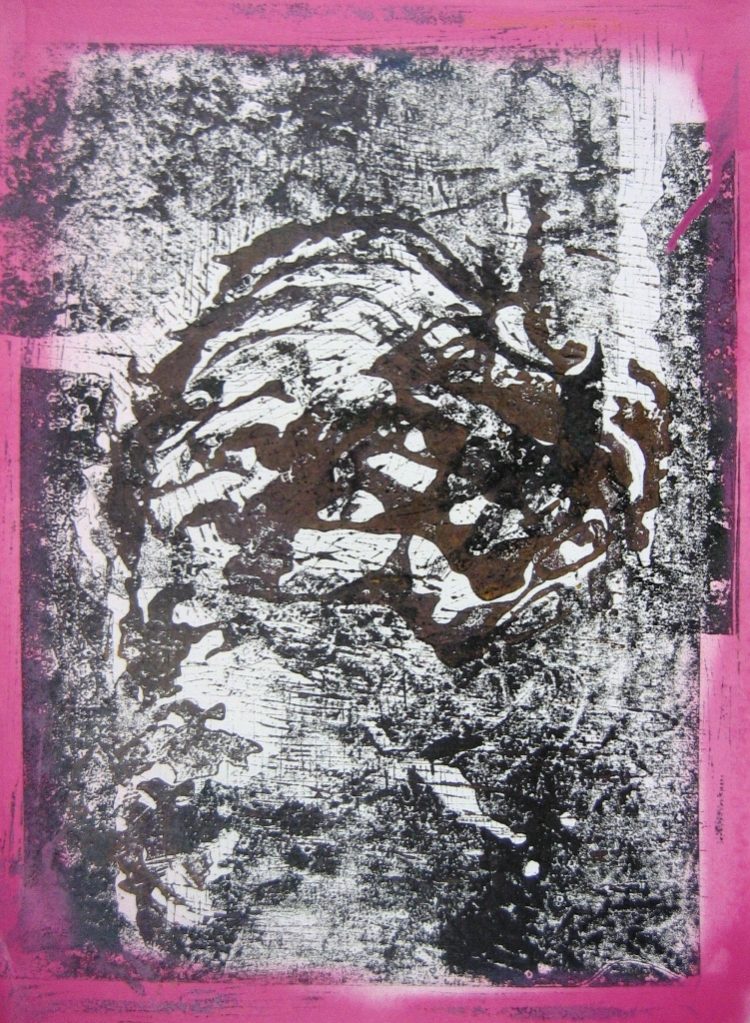
(5) Untitled (2006). Acrylic spray on linocut print on paper (50x35cm). Edition: unique. ©Tolis Tatolas
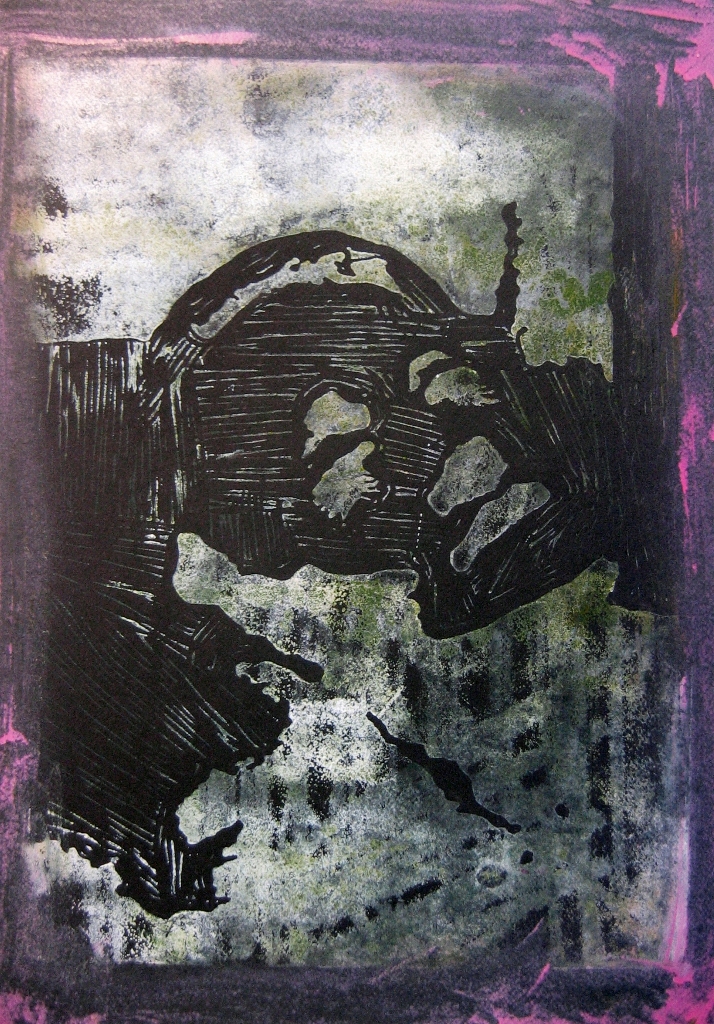
(6) Untitled (2006). Acrylic spray on linocut print on paper (50x35cm). Edition: unique. ©Tolis Tatolas
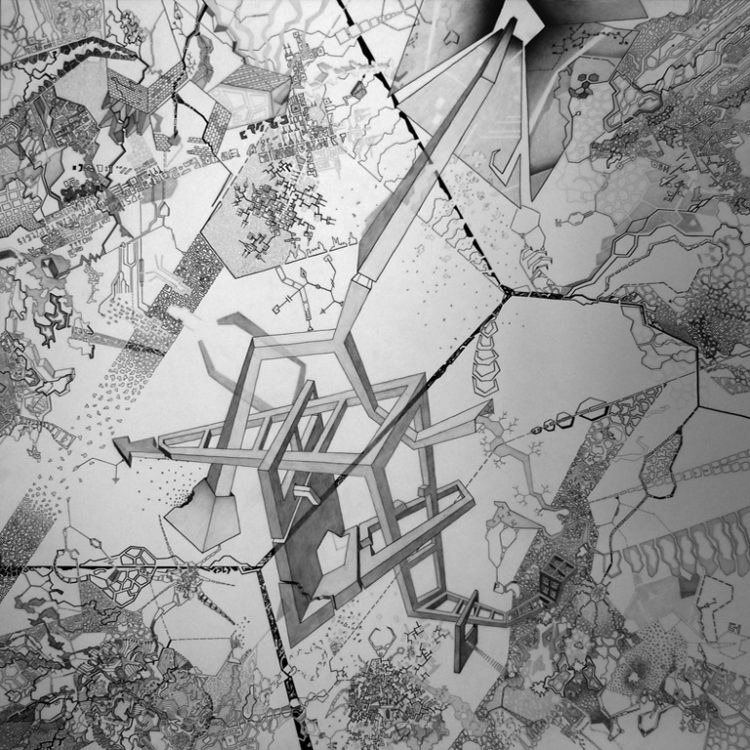
(7) Untitled (2016). Archival ink, graphite pencil and colored pencil on fine art paper (95x95cm). ©Tolis Tatolas
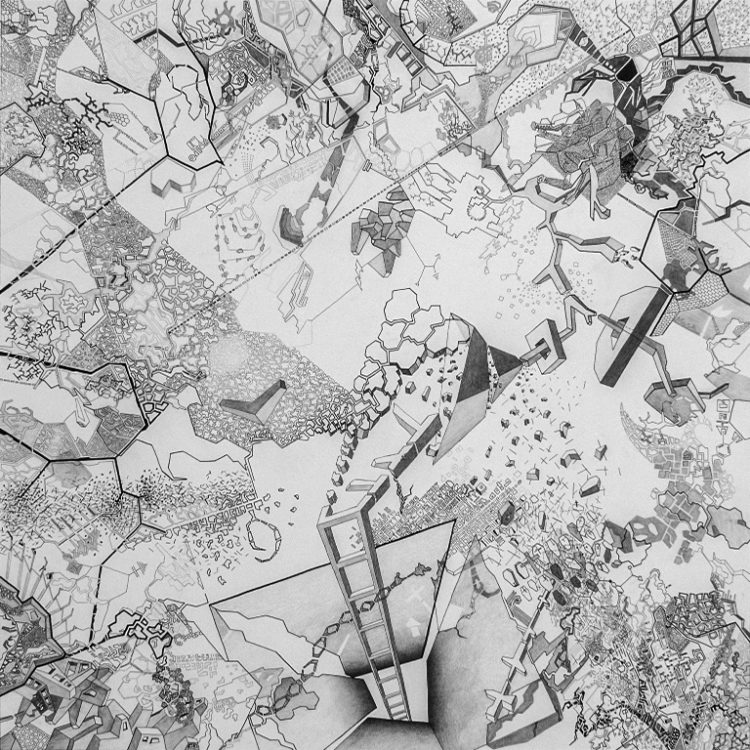
(8) Untitled (2016). Archival ink, graphite pencil and colored pencil on fine art paper (100x100cm). ©Tolis Tatolas

(8) Wall Dystopia #3 (2013). Archival pigment print on museum grade fine art paper image size 90x90/ paper size 100x100. Signed, titled, dated and numbered in ink on verso. Limited edition of 3 +1AP. ©Tolis Tatolas
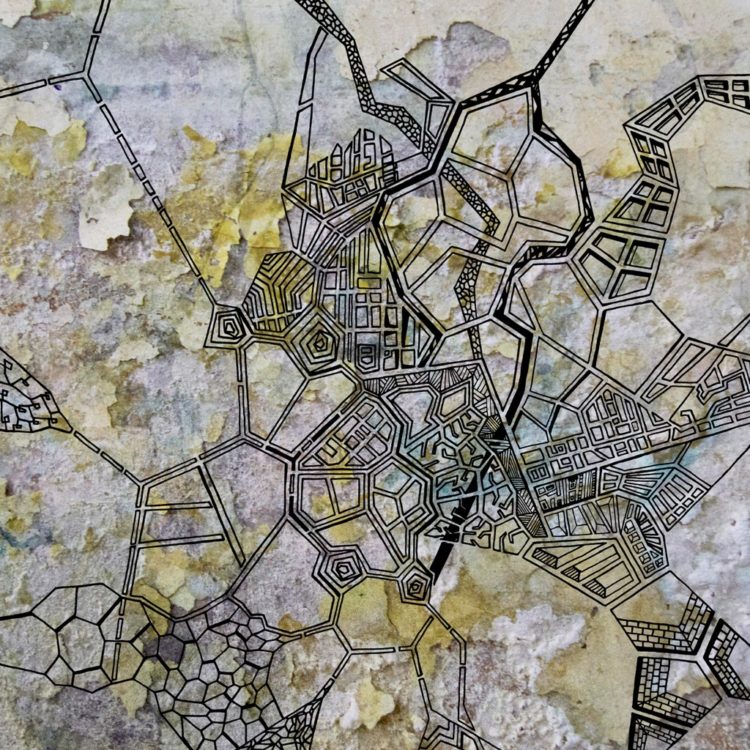
(9) Wall Dystopia #9 (2013). Archival pigment print on museum grade fine art paper image size 90x90/ paper size 100x100 signed, titled, dated and numbered in ink on verso. Limited edition of 3 +1AP. ©Tolis Tatolas
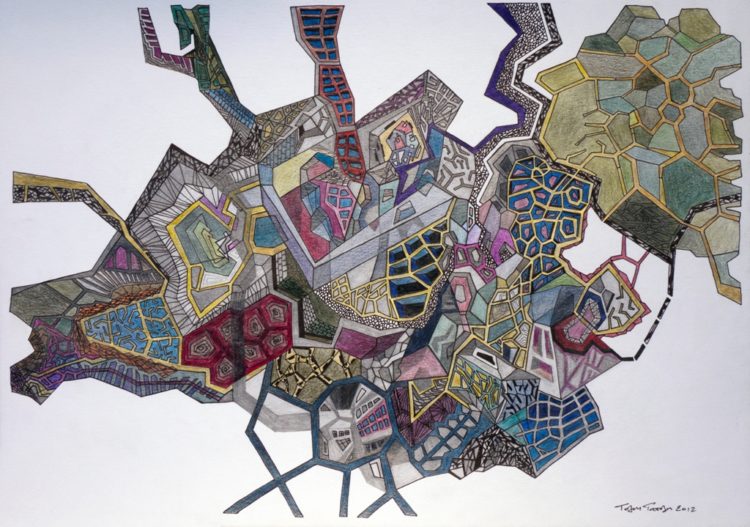
(10) Untitled (2012). Archival ink, graphite pencil and colored pencils on paper (30x42cm). ©Tolis Tatolas
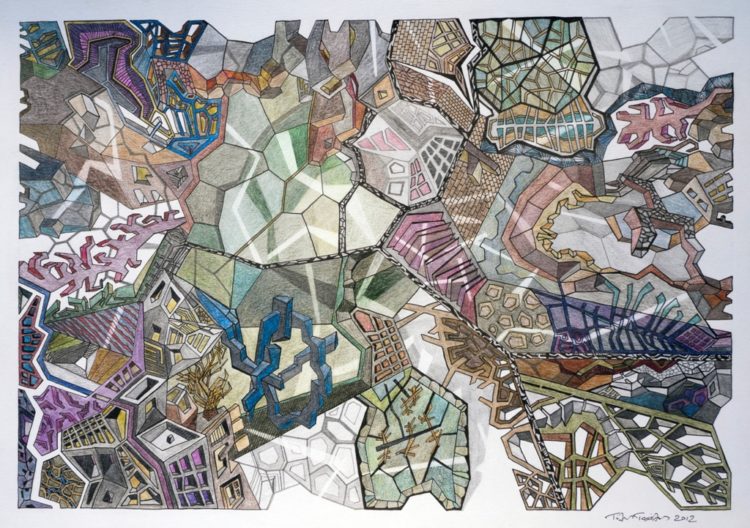
(11) Untitled (2012). Archival ink, graphite pencil and colored pencils on paper (30x42cm). ©Tolis Tatolas
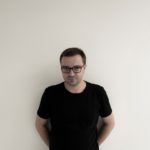
Tolis Tatolas
BIO
Tolis Tatolas was born in 1978 and currently lives in Athens. Since 2006, he works as a visual artist and spatial designer. He studied Interior Design at the Vakalo College of Art and Design/University of Derby (BA Hons, 2008) and Biology at the Aristotle University of Thessaloniki (BSc Hons, 2002). He had six solo exhibitions and participated in 21 group exhibitions in Greece, UK, Czech Republic and Austria. He has written the book Animals in the Homeric Ages (2005, Erodios) and has contributed to the edited volume Science and Tehcnology in Homeric Epics (2008, Springer). Articles and works by him have been published in the Greek and international press. He has designed the sets and costumes of numerous works by Greek and international play-writters in Athens (Megaron – The Athens Concert Hall, Aggelon Vima etc.). His works are part of private collections in Greece and abroad (USA, UK, France, Canada and Czech Republic). He has been a member of the Chamber of Fine Arts of Greece since 2014. Tatolas' artistic interests focus on geometry and abstraction and on how they can reflect ideas and conditions, and create and communicate feelings in a way similar to representational art. Creatively, he employs a holistic approach to aesthetics, within a framework of unity of all arts.